

Kova Atelier
The Craft
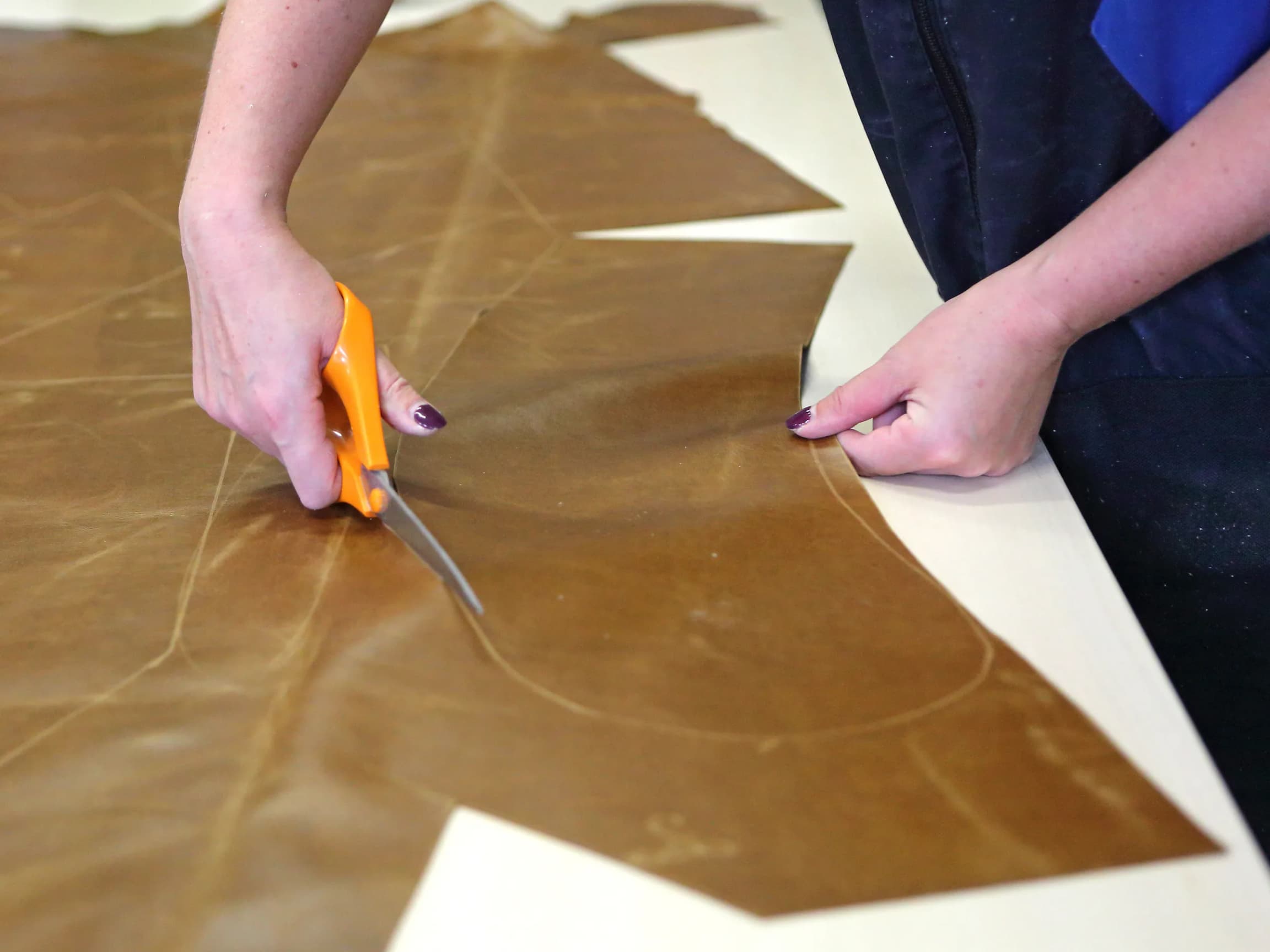
How We Make It
Every component in a Kova piece carries certification under European Union directives. That covers the wood, the leather, the fabrics and the fixings.
What the factory will not buy: anything containing plastics or toxic chemicals, and anything that cannot be recycled, repaired or remanufactured at the end of its life. That last one rules out most of what the volume furniture market is built from.
The wood is natural. The leather comes from Italian tanneries. The tweed is woven in Scotland.
And the piece is built to be repaired. A sofa that can be opened, fixed and closed again does not become landfill in year eight. That is the part of sustainability nobody advertises, because it is the part that costs the manufacturer money.
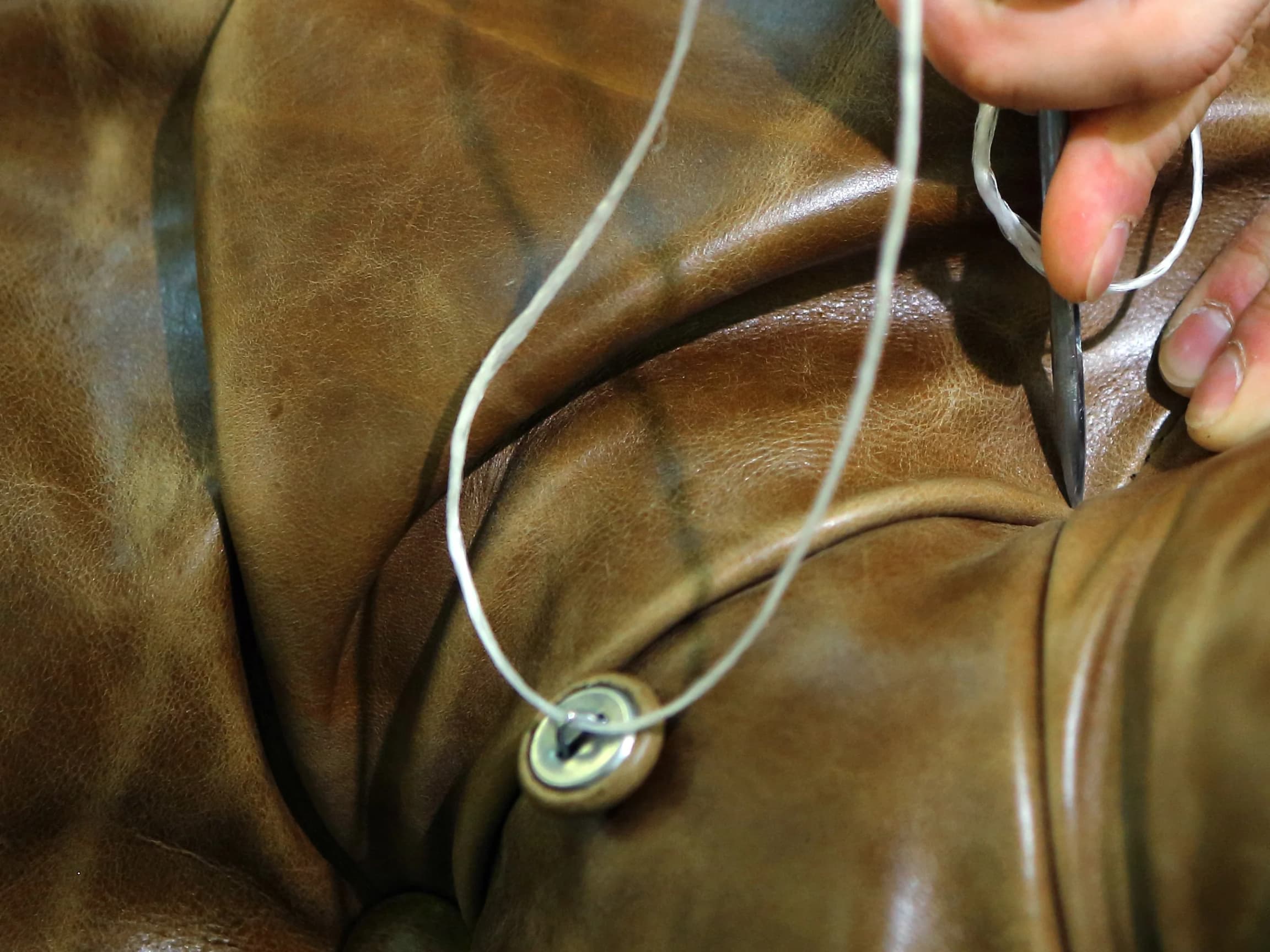
Hand Deep Buttoning
Every sofa that leaves the factory is upholstered by hand.
Deep buttoning is where that matters most. Each button is drawn and tied one at a time, because a machine cannot read the grain of a hide or the direction of a weave. The person doing it decides how deep to pull based on what the material in front of them will take.
Done badly, the buttons sit on the surface. Done well, they pull the material into the frame and hold the shape that gives the form its depth.
The team doing this work has been doing it for over three decades.
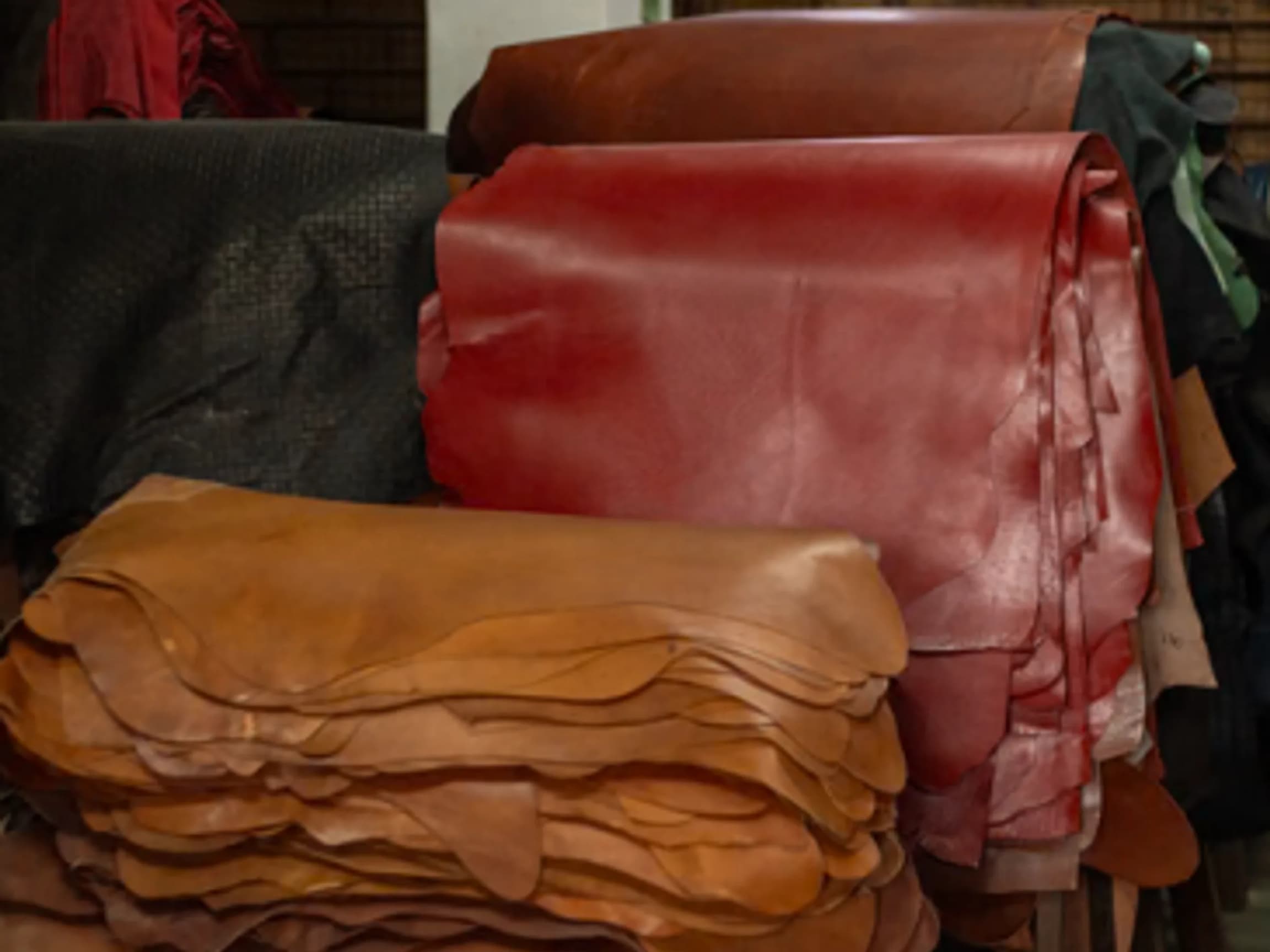
The Materials
We work in three families and we do not blend the story.
Full aniline leather, Italian. Hide dyed all the way through with no pigment coat on top. You see the real grain, and over the years you see the real life of it. It is the most beautiful leather to live with and the least forgiving to spill on. We would rather tell you that now than after.
Genuine Harris Tweed. Woven in the Outer Hebrides and carrying its own official mark. We use it on selected models, paired with leather on the arms and facings where the wear is hardest.
Natural hardwood underneath all of it.
Every material we use comes from a certified source. The factory does not buy anything that cannot be recycled, repaired or remanufactured, which rules out most of what the volume market is built from.
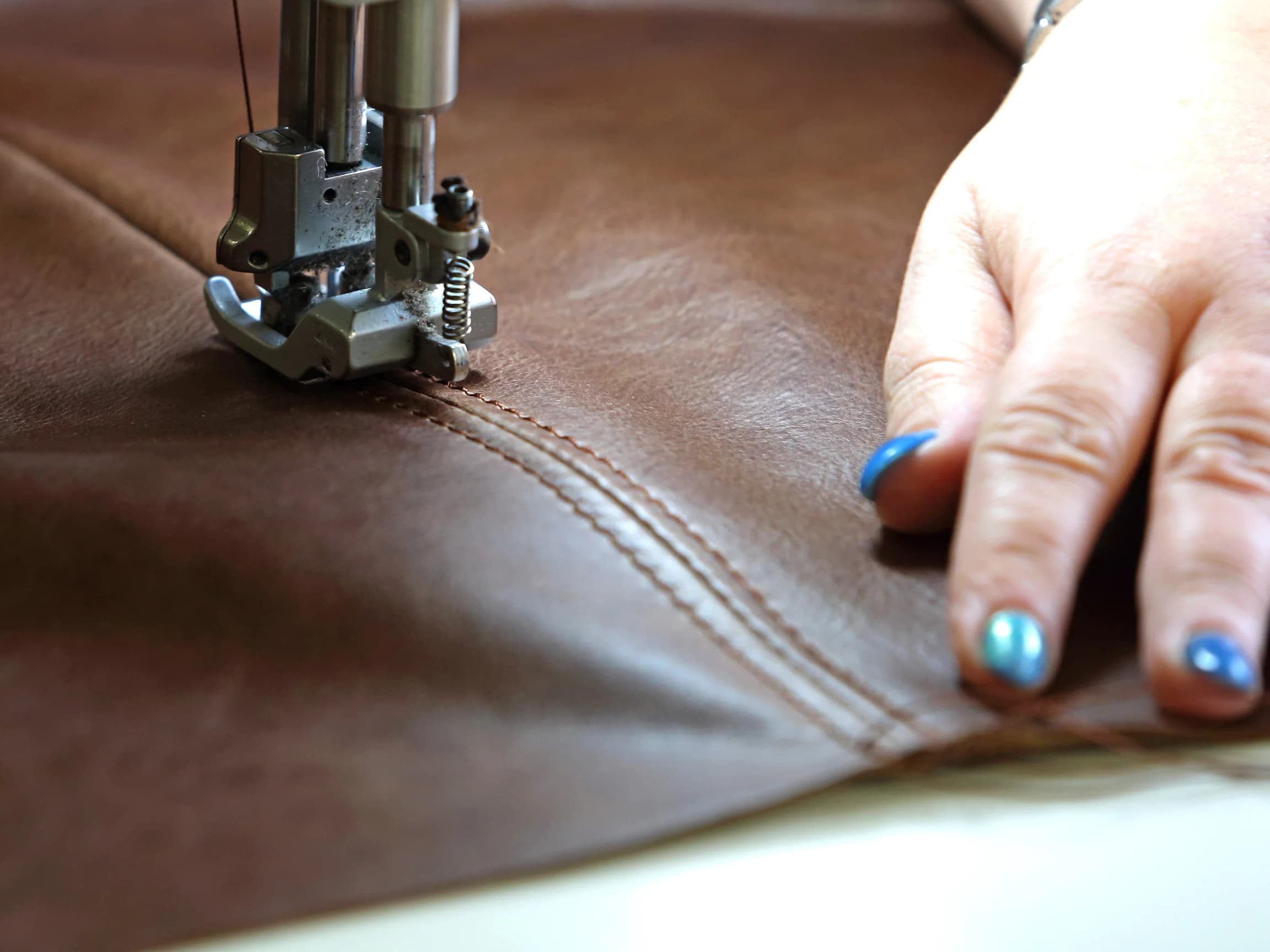
The Finishing
The last hour takes the longest.
Seams are checked. Trim is set. Wooden feet are fitted and levelled. The whole piece is gone over before it is allowed to leave.
Nothing here adds a feature. It is the difference between a piece that looks made and a piece that looks finished.
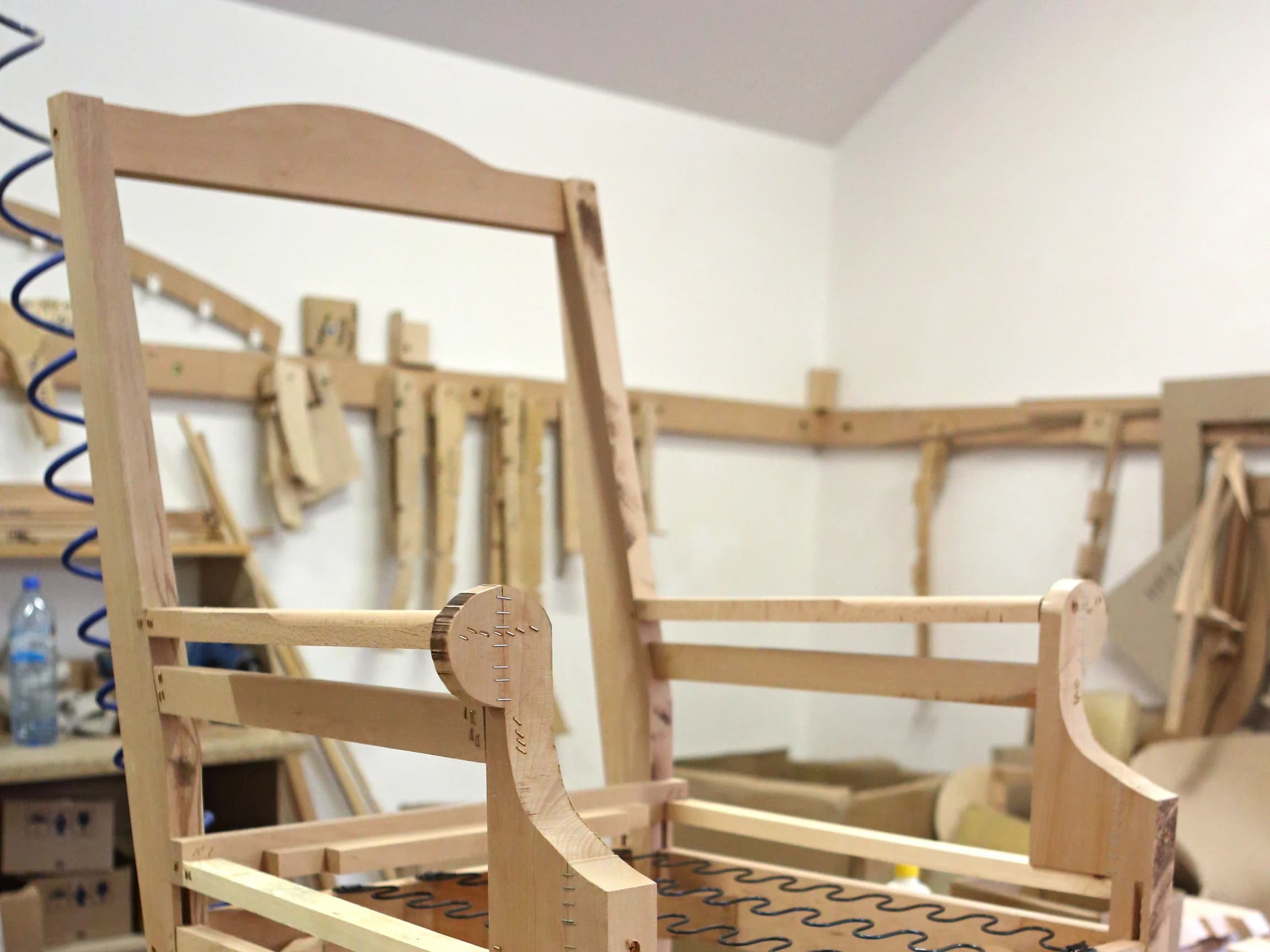
The Frame
Everything else in a sofa is a decision. The frame is a commitment.
Ours is built from natural hardwood, and every component in it carries certification under European Union directives. No plastics. No toxic chemicals. That is not a preference, it is a requirement the factory holds itself to and can document.
It is also built to be taken apart. Most furniture at this price is assembled in a way that makes repair uneconomic, which is a quiet way of deciding it will be thrown away. Ours is put together so a frame can be opened, fixed and closed again years later.
That is why the frame carries a lifetime warranty to the original owner. Not because we are optimistic. Because a piece that can be repaired does not need to be replaced.